Commercial TPO Roofing Systems in Dallas–Fort Worth
Energy-Efficient, Durable Roofing Built for Commercial Properties

About Pillar Roofing
Every Detail. Every Step. Every Time
Every Detail Matters.
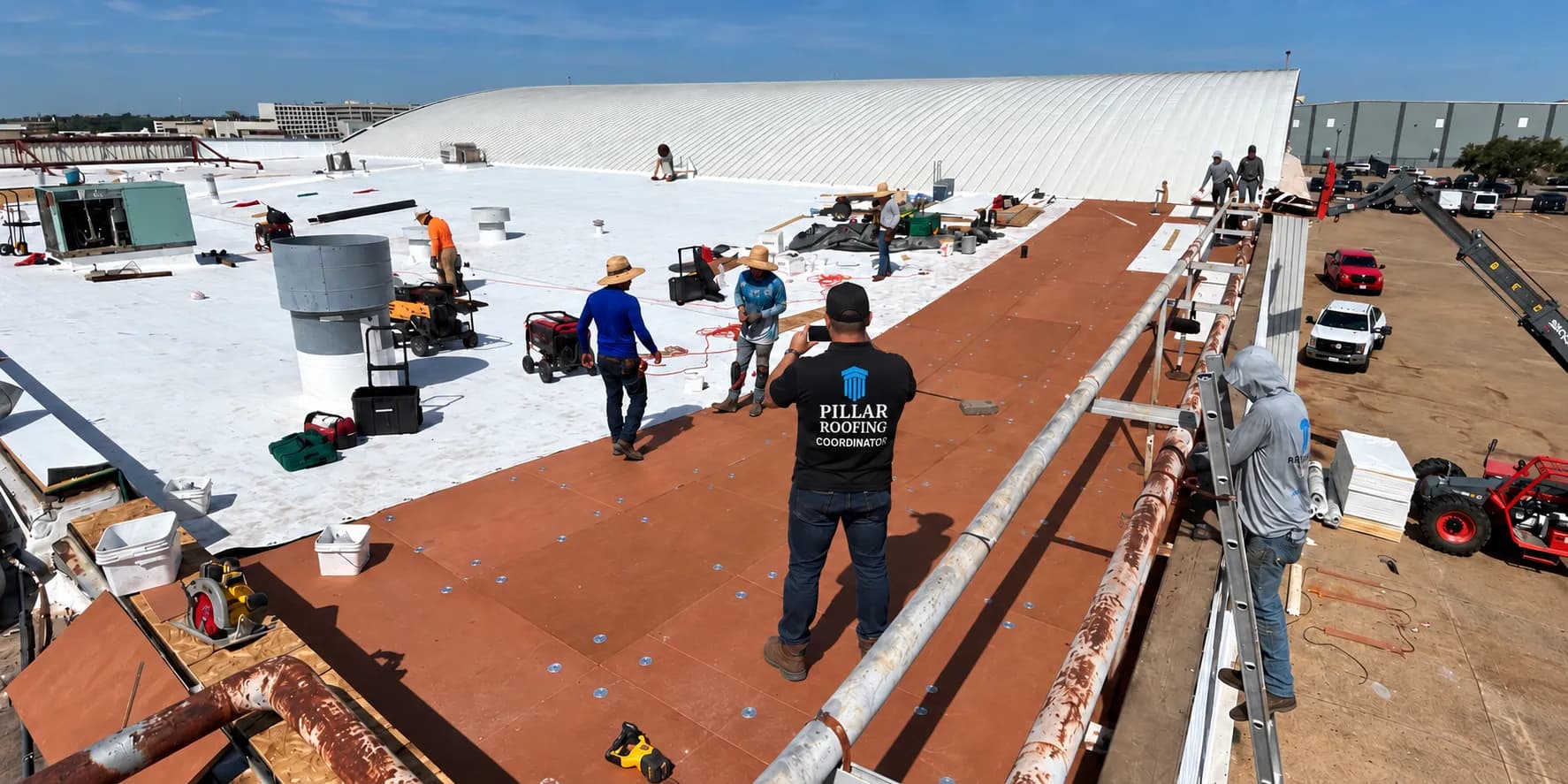
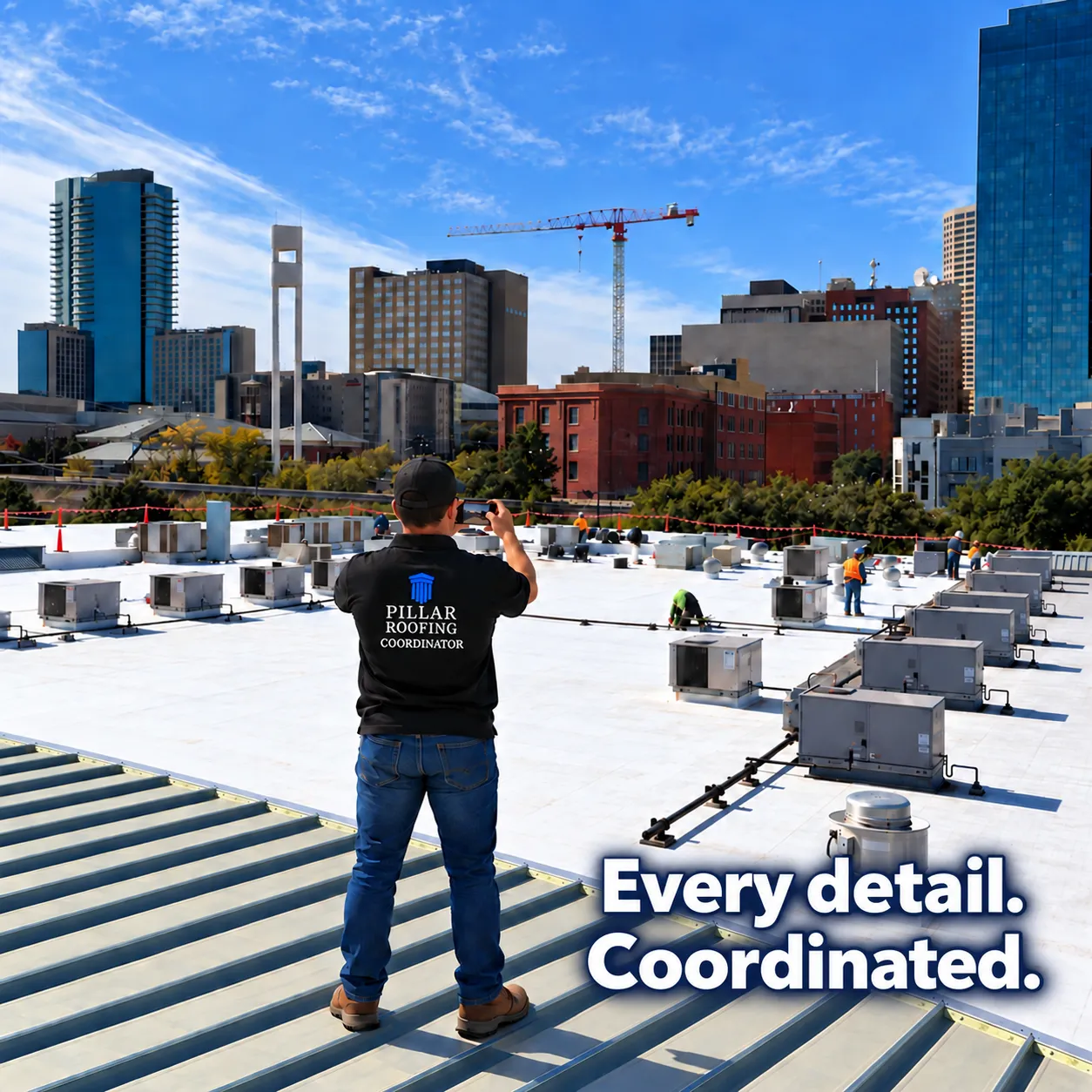
A successful TPO roofing installation depends on far more than simply rolling out membrane. The Pillar Roofing Coordinator oversees every phase of the project—from material deliveries and crew logistics to safety compliance, installation sequencing, seam quality, drainage details, and manufacturer specifications.
Throughout the installation, every critical component is monitored, documented, and verified before the project moves forward. As the work nears completion, the coordinator develops and manages the punch list, ensuring every detail is addressed before final acceptance.
This disciplined oversight helps deliver a roofing system built to perform reliably for decades—not just pass inspection on the day it's installed.
Some images on this page are illustrations used to demonstrate our services. Actual project photographs are also included.
About Pillar Roofing
Heavy Rain Drain
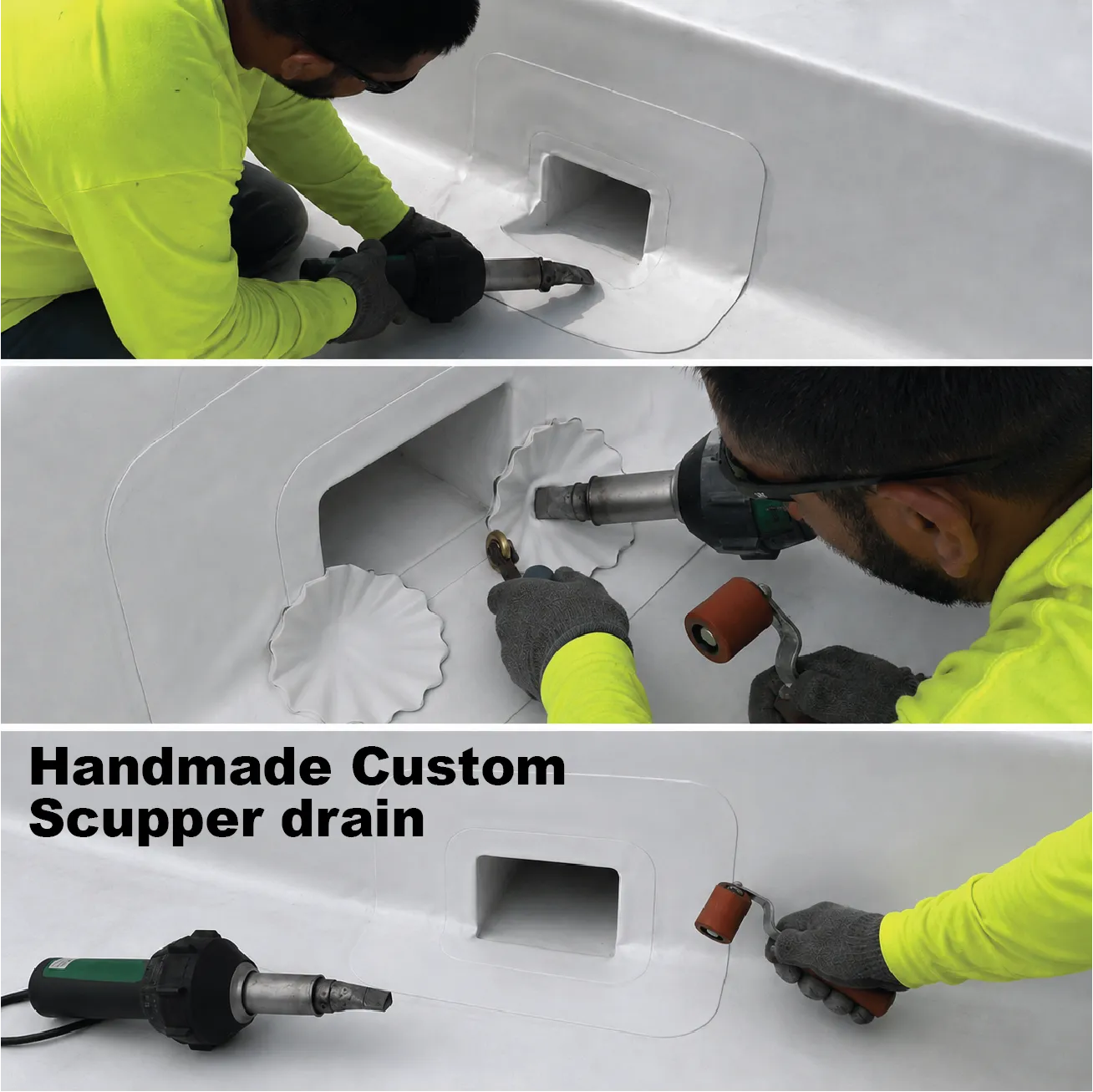
Each custom overflow scupper begins with a sheet metal insert. We use automated hot-air welding technology to create strong, consistent membrane seams. The TPO flashing around the scupper openings is sealed and tied in to the interior and exterior details to direct overflow water through the parapet.
The roof side details are molded and heat-welded together to form the shape of the scupper drains. Once the interior side is welded and sealed, the outside exposed scupper is waterproofed and heat-welded flush with the parapet wall detail.
These custom scupper drains will handle the overflow rainwater during heavy downpours.
About Pillar Roofing
What's Under The TPO
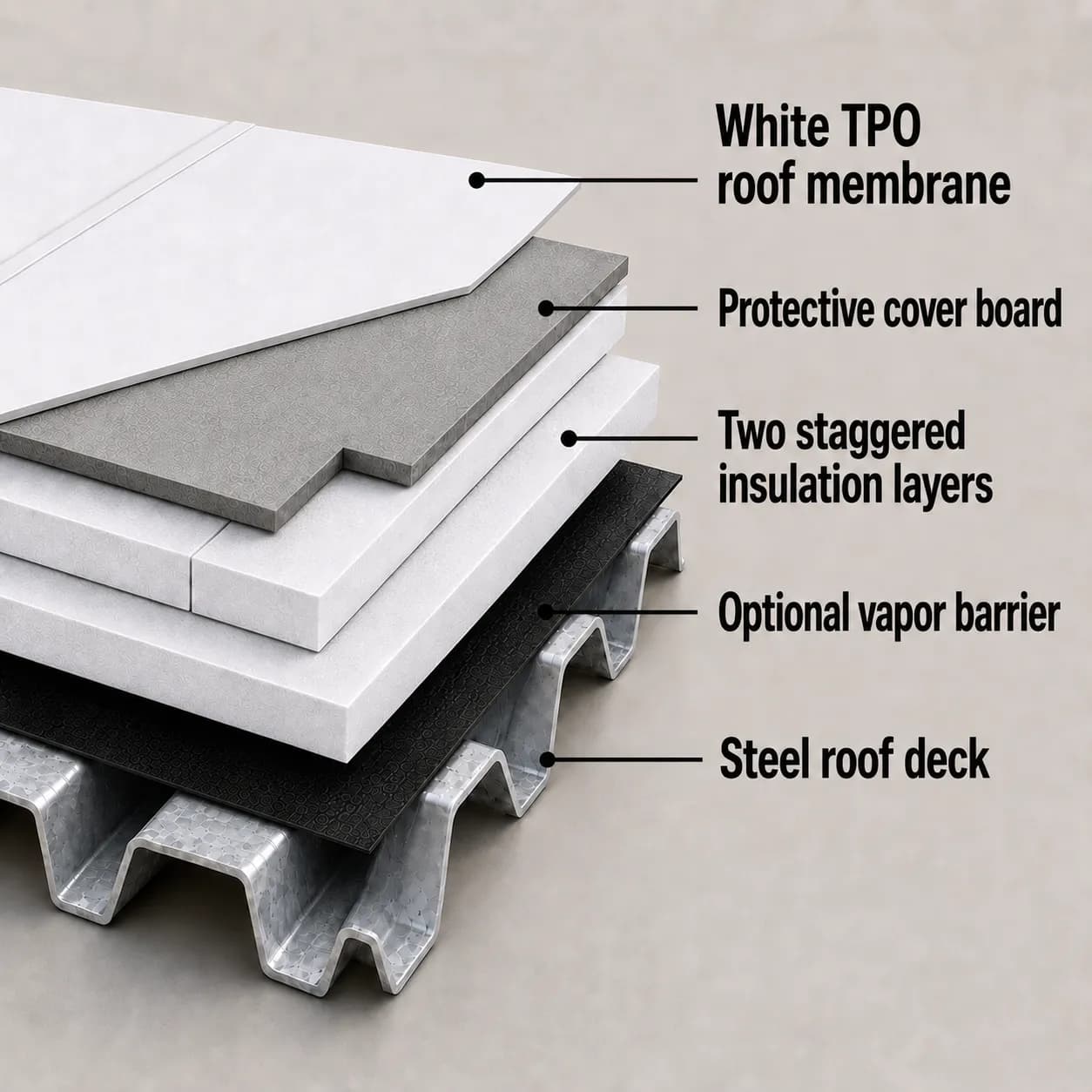
A quality TPO roof is built as a complete system, not simply a sheet of membrane laid over insulation. Installing the insulation in two staggered layers prevents the board joints from lining up and creating continuous gaps through the assembly.
This helps reduce heat loss, limits air movement, distributes loads more evenly, and creates a stable surface beneath the membrane. Properly fitted and staggered insulation also reduces movement that could eventually become visible through the finished roof.
The protective cover board provides an additional layer of strength between the insulation and the TPO membrane. It creates a smooth, durable surface while helping protect the softer insulation from foot traffic, tools, service work, hail and other impacts. By improving puncture resistance and distributing pressure across the roof system, the cover board can extend the service life of the membrane—especially around rooftop equipment and other regularly accessed areas.
About Pillar Roofing
Rainwater Management
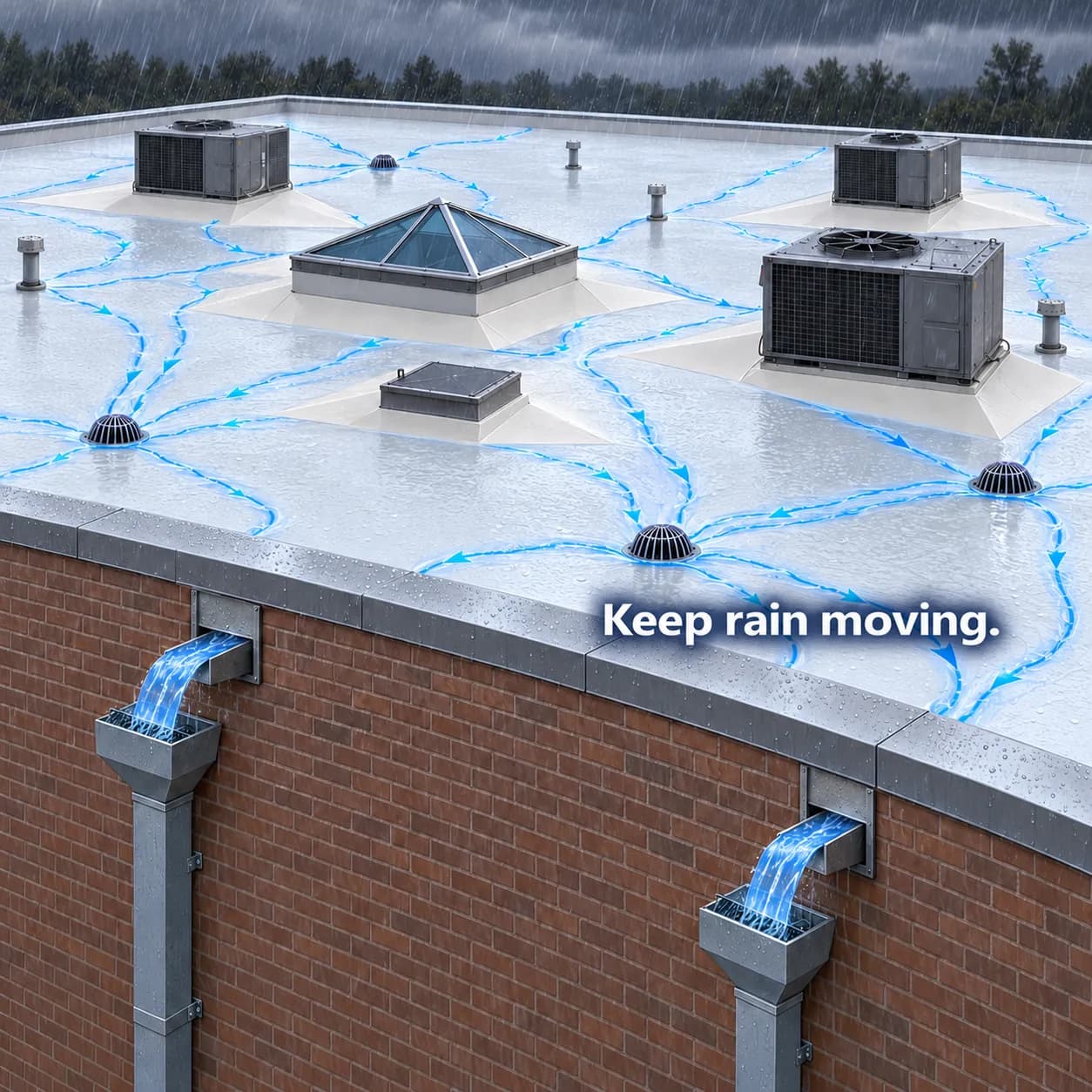
The illustration shows that Crickets and Saddles are shaped slopes installed beneath the TPO membrane, often using tapered insulation, to direct rainwater around rooftop equipment, curbs, and other obstructions.
These raised areas divide the water and guide it into drainage paths leading toward the roof drains, helping minimize low spots where water could collect and pond.
Primary drains handle normal rainfall, while properly placed scuppers carry water through the roof edge.
When designed as secondary overflow drainage, scuppers provide an important backup if the primary drains become blocked or cannot handle a heavy storm.
About Pillar Roofing
New Drain - New Flow
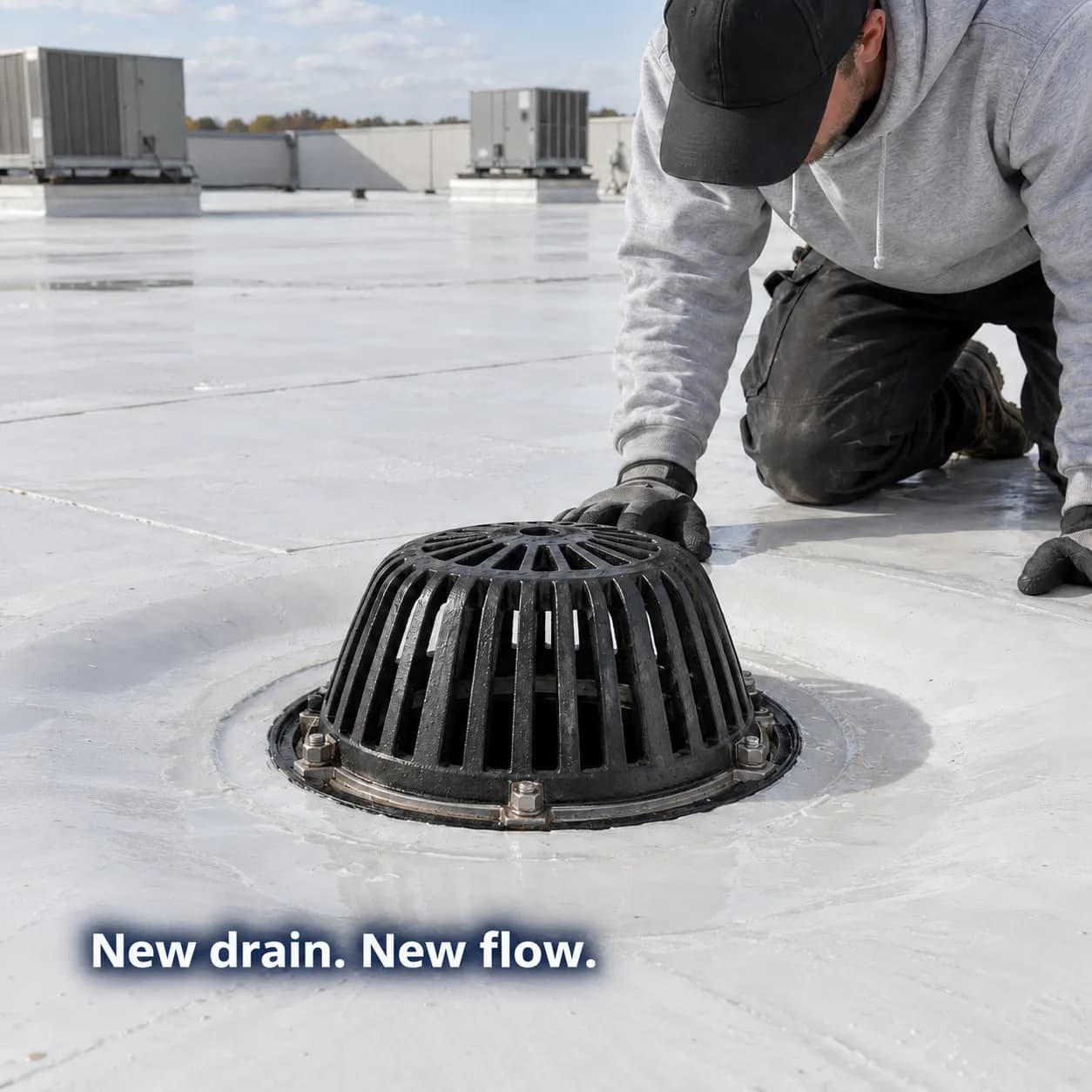
TPO drain assemblies are replaceable, improving water flow and giving the drainage system new life.
A properly fitted drain grill helps prevent leaves, dirt, and debris from clogging the drain and obstructing rainwater flow. We recommend professional roof maintenance twice a year, with additional drain checks after major storms or heavy debris buildup.
Ask your Pillar Roofing Coordinator about our scheduled maintenance program.
TPO Roofing Systems
Building Owners, Please Note:
A retrofit cover is considered only after evaluating existing roof layers, trapped moisture, deck condition, attachment, drainage, and applicable manufacturer and local requirements.

Single-Ply TPO Roofing Systems
Thermoplastic Polyolefin (TPO) roofing systems are among the most popular commercial roofing solutions available today. TPO membranes provide excellent resistance to UV exposure, ponding water, weathering, and temperature fluctuations while delivering outstanding energy efficiency through their highly reflective surface.
The TPO membrane is mechanically fastened or fully adhered according to manufacturer specifications. All seams are heat welded to create a monolithic waterproof surface that provides exceptional long-term protection against leaks and weather intrusion.

Fully Adhered TPO Systems (Recovering Existing Flat Roof Systems)
A fully adhered TPO roofing system provides one of the most attractive and durable solutions for commercial flat roofing applications. Unlike mechanically attached systems, the membrane is bonded directly to the insulation substrate using manufacturer-approved adhesives, creating a smooth, uniform appearance with exceptional wind uplift performance.
Mechanically Attached TPO Recover System
A mechanically attached TPO recover system allows building owners to install a new roofing assembly directly over the existing roof after repairs and preparation have been completed. This approach reduces disruption, minimizes landfill waste, and often provides a more economical solution than a full replacement.

State-of-the-Art Seam Welding
Automated hot-air welding technology to create strong, consistent membrane seams. Robotic seam welders maintain precise temperature, pressure, and travel speed throughout the welding process, producing uniform welds across long roof runs.
Recovering Over Existing Built-Up (Tar & Gravel) Roofing Systems
Many commercial buildings still have older built-up roofing (BUR) systems consisting of multiple layers of asphalt, felts, and embedded gravel. While these roofs can often be restored rather than completely torn off, proper surface preparation is absolutely critical to the success of the new roofing system.
Our restoration process begins with the removal of loose gravel and surface contaminants using specialized vacuum equipment. The existing roof is then mechanically prepared using rotary wire-brush machinery to create a clean, stable substrate for the new roofing assembly.
A Smart Alternative to Tear-Off
RhinoBond TPO Roofing System
The RhinoBond TPO Roofing System combines the strength of a mechanically attached roofing system with the performance benefits of a fully adhered membrane. Using advanced induction-weld technology, the TPO membrane is securely bonded to specially engineered attachment plates beneath the roof surface, creating a stronger and more uniform attachment across the entire roof.

Key Benefits
Superior wind uplift performance for Texas weather conditions
Reduced membrane movement and roof flutter
Enhanced long-term durability and system longevity
Excellent performance on large commercial, industrial, and aviation facilities
Energy-efficient reflective TPO membrane helps reduce cooling costs
No field-applied bonding adhesives required
Proven technology trusted on warehouses, manufacturing plants, distribution centers, and airport facilities
TPO Crickets and Saddles for Positive Water Drainage
Crickets and saddles are engineered insulation structures designed to redirect water around rooftop equipment, curbs, and other obstructions, allowing water to flow efficiently toward roof drains, gutters, and designated drainage points.
By eliminating areas where water can become trapped, these drainage enhancements help extend the service life of the roofing system, reduce maintenance concerns, and improve overall roof performance.

Benefits
Promotes positive water drainage across the roof surface
Reduces ponding water and moisture-related deterioration
Directs water around HVAC units and rooftop obstructions
Improves long-term performance of the TPO roofing system
Designed specifically for the roof's drainage layout and water flow patterns
Supports a cleaner, drier, and more efficient roofing system
HVAC Equipment Securement System

The TPO straps are heat-welded to the roof surface. This method helps resist movement, uplift, and displacement of rooftop equipment during high-wind events while maintaining the integrity of the roofing system.
Benefits
Improved resistance to high-wind uplift forces
Additional protection for rooftop HVAC equipment
Heat-welded watertight attachment system
No exposed fasteners through the roofing membrane
Ideal for airport, industrial, and commercial facilities exposed to elevated wind conditions
About Pillar Roofing
Fresh Start
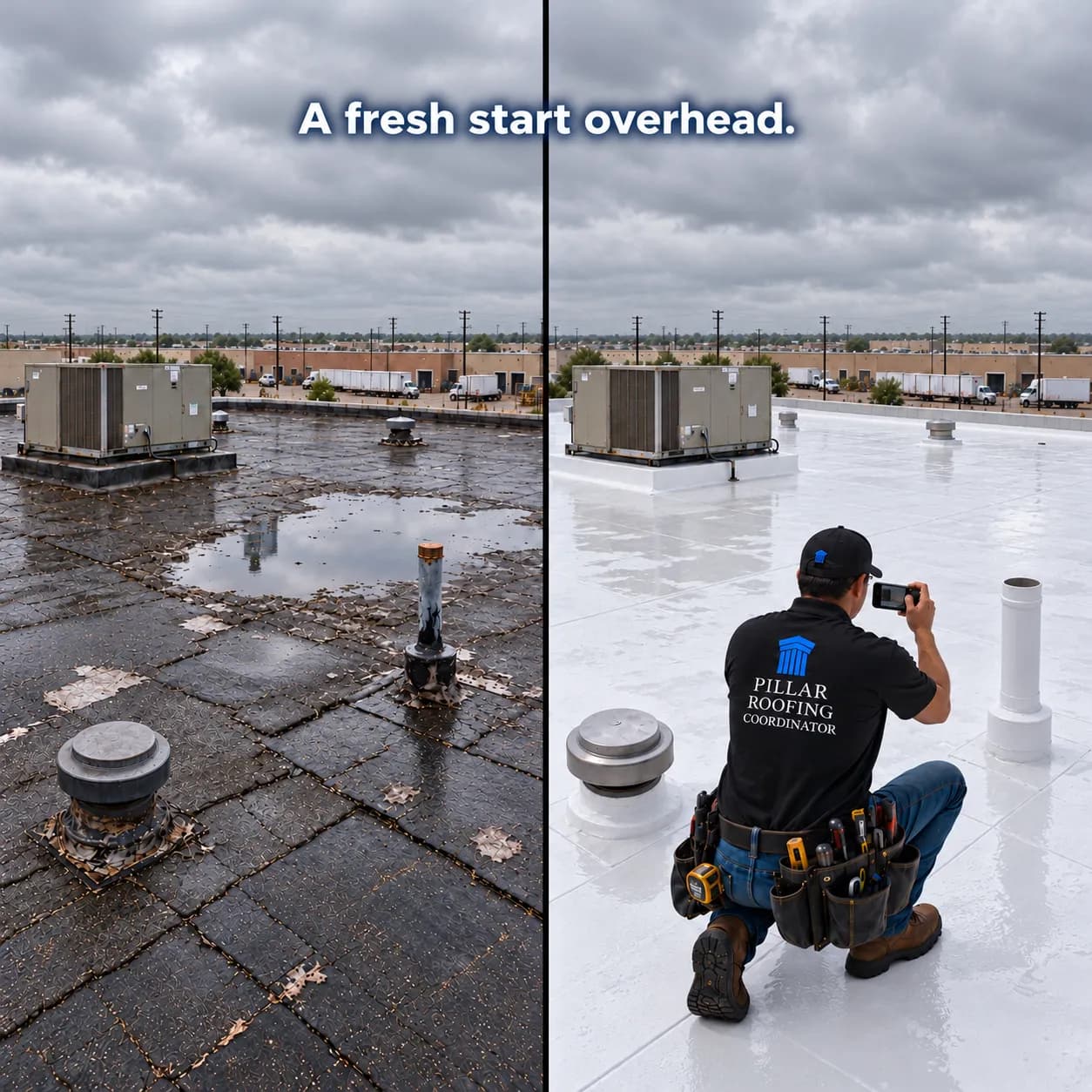
This roof had reached the point where worn surfaces, deteriorated details, and standing water called for a fresh start. Pillar Roofing installed a new TPO roofing system, carefully addressing seams, flashing, and penetrations. Your Pillar Roofing Coordinator documented the finished work, giving the property owner a clear view of the improvements overhead.