About Pillar Roofing
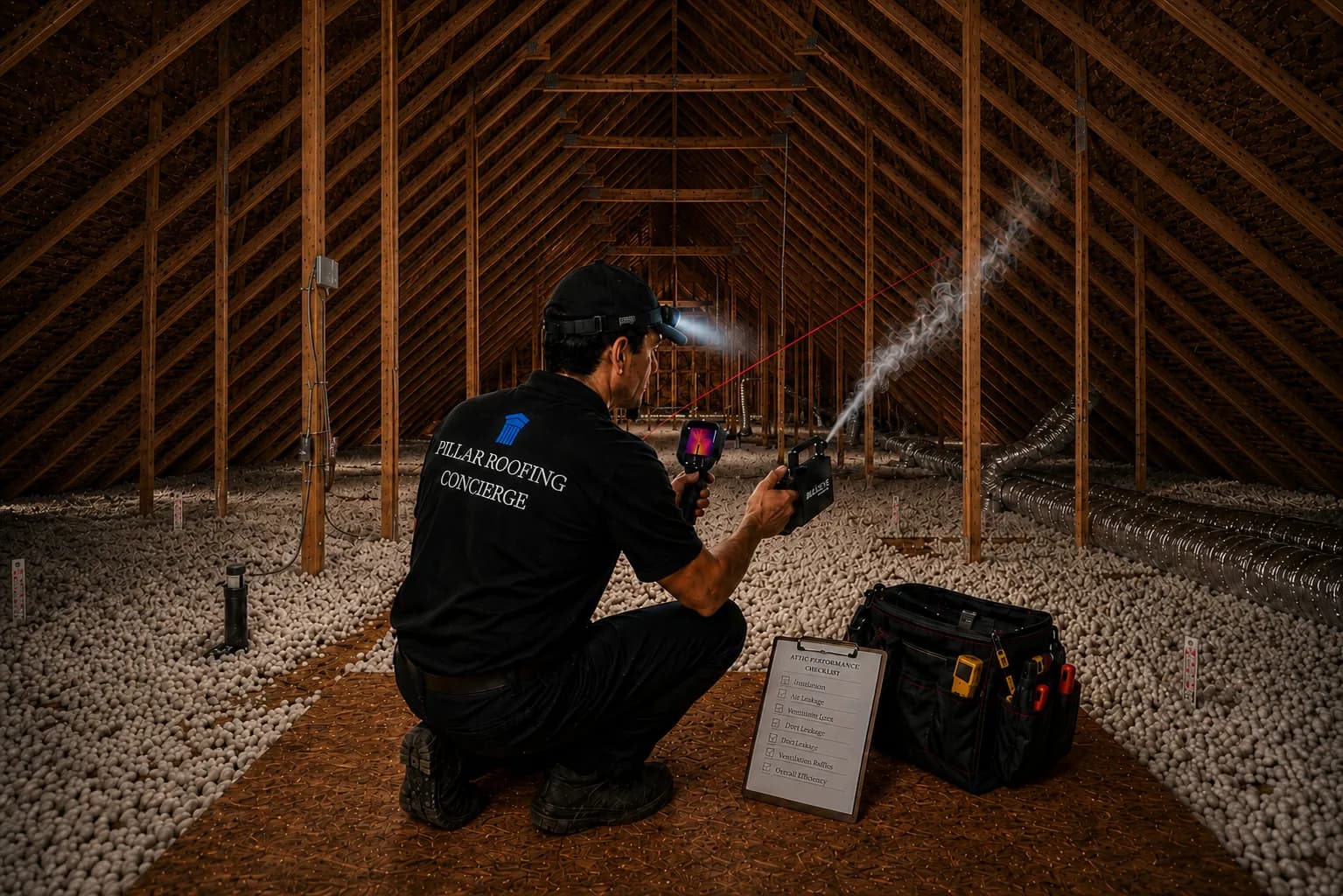
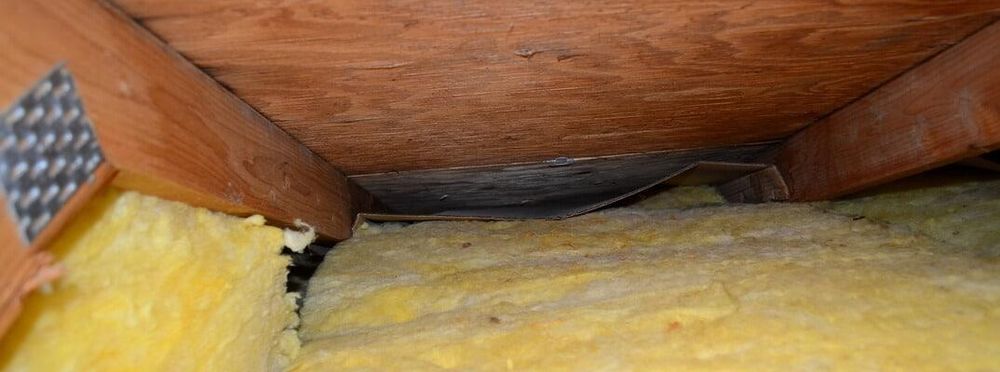
We evaluate your Attic using a thermal imaging gun and smoke dispersion to identify heat buildup, air leaks, drafts, blocked pathways, and trapped air.
Using our findings, we will recommend a balanced Proactive ventilation solution for the Attic.
Solutions include: cleaning or replacing clogged soffit vents, adding more soffit vents, removing insulation blocking airflow, and upgrading to a more proactive ventilation system with moving parts that create air circulation, measured in cubic feet per minute (CFM).
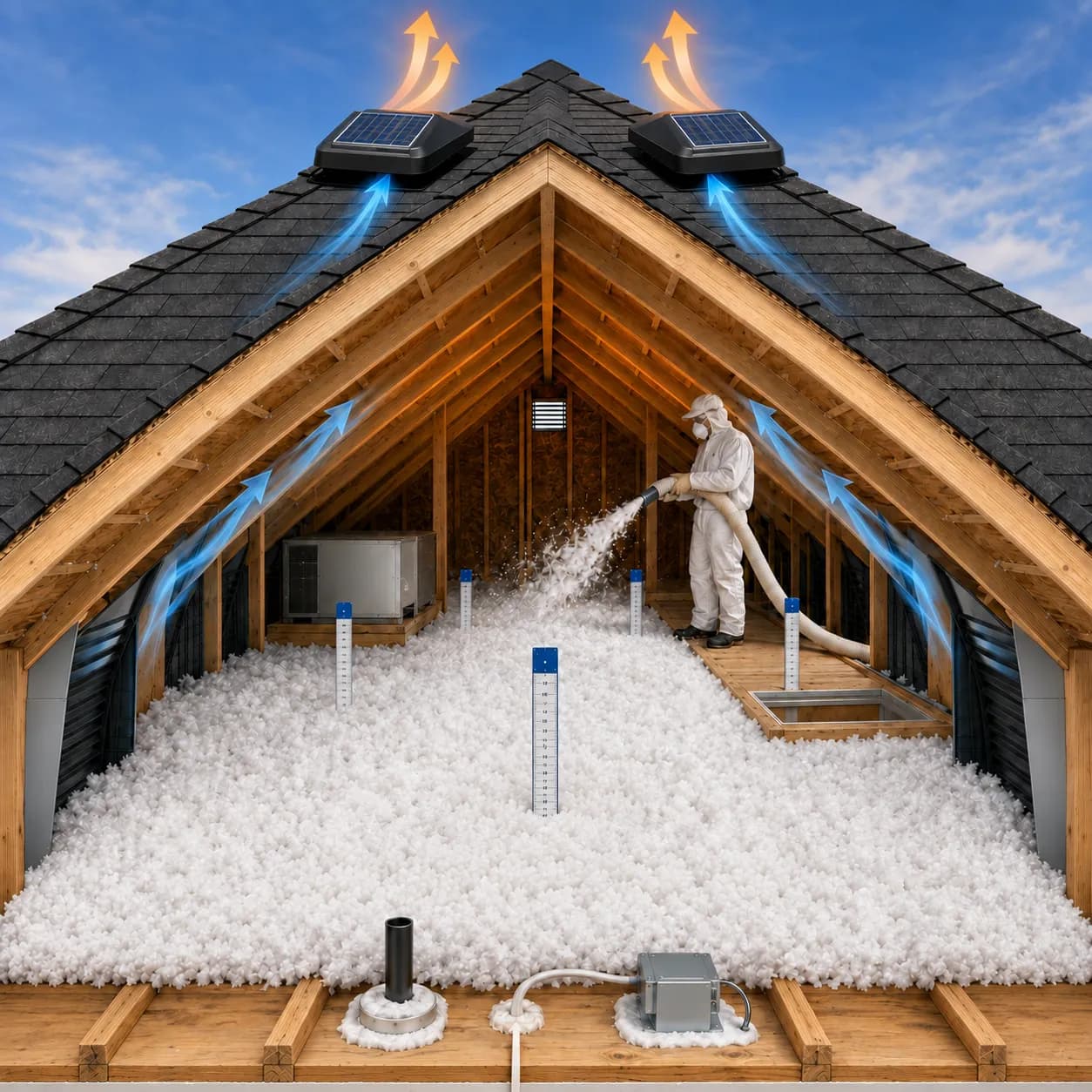
The goal is to move the air from the bottom of your attic to the top, where the exhaust will push it out. If this process starts early in the morning, it will help lower the "Heat Gain" in your attic later in the day.
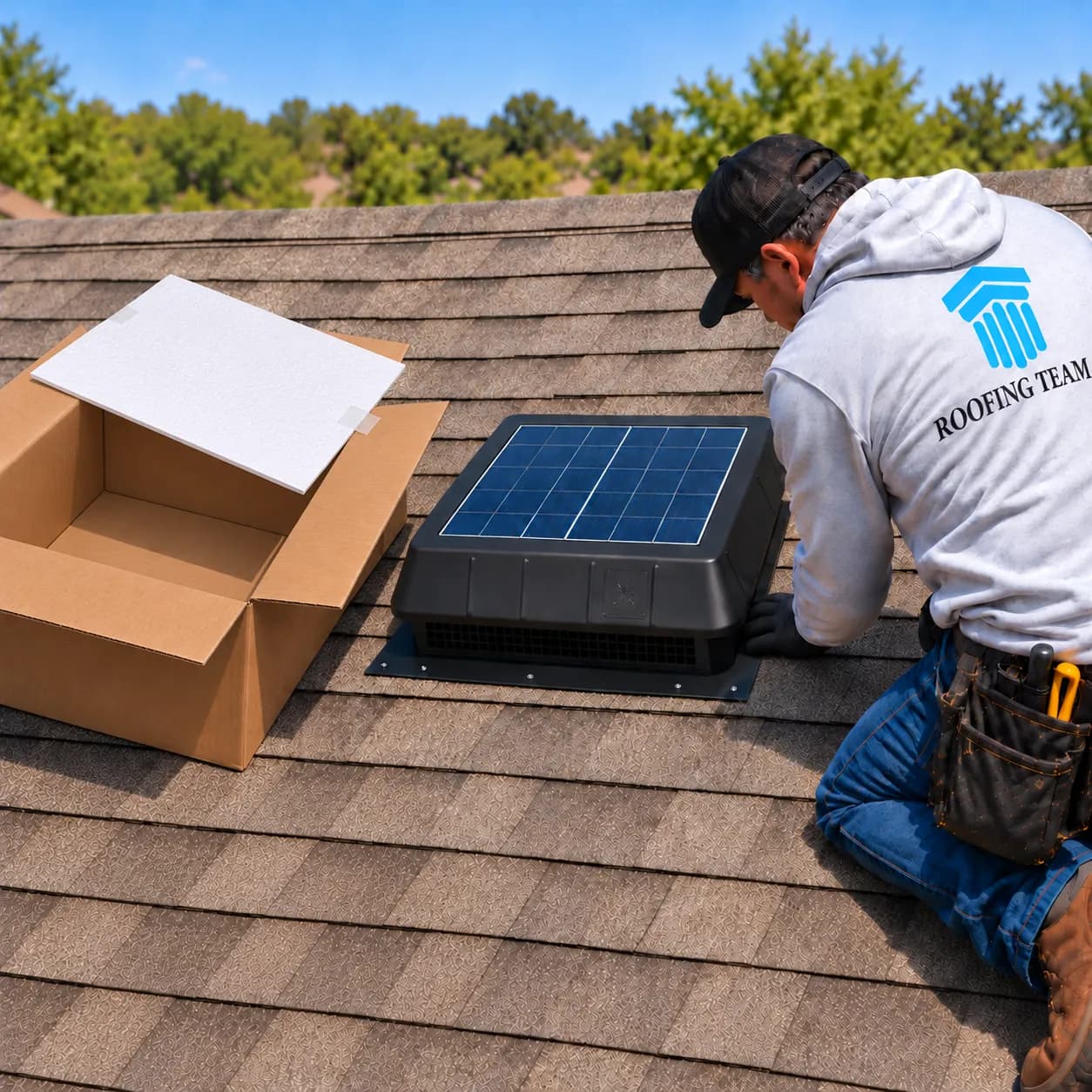
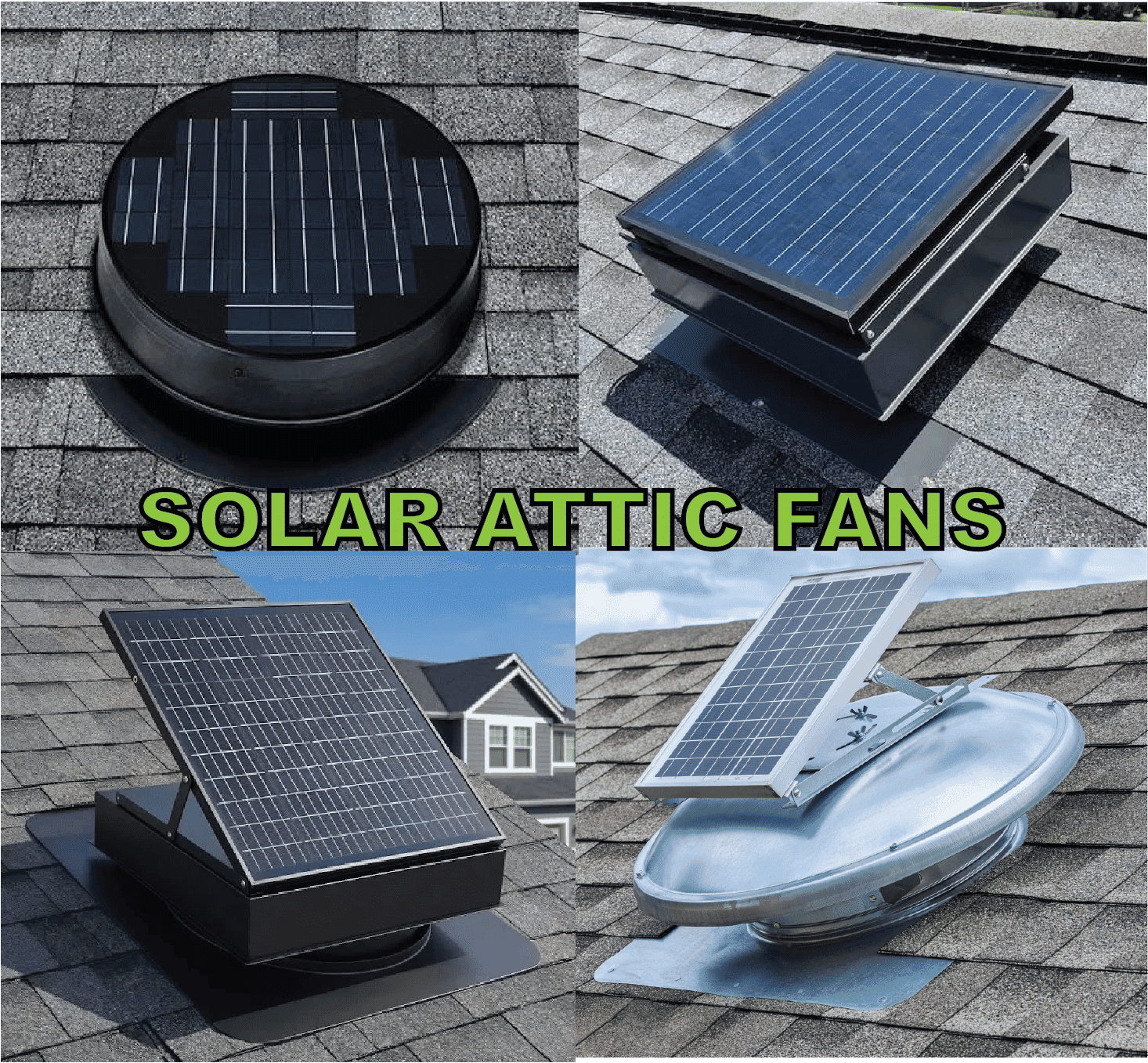
Instead of waiting for heated air to escape on its own, a proactive solar attic fan system continuously pulls hot air out of the attic, reducing heat and humidity.

About Pillar Roofing
Reaching R-49 with blown-in fiberglass generally requires roughly 18 inches of properly installed material. However, the exact thickness and number of bags vary by product and must follow the manufacturer’s coverage chart.
Increasing the insulation in your attic to the proper level slows heat loss through the ceiling during winter and reduces heat gain during summer.
R-49 shields the interior of your home from wild attic temperature swings and reduces heating and cooling energy costs.
Blown-In Fiberglass consists of lightweight glass fibers, commonly made with sand and recycled glass, that are mechanically blown across the attic floor. The material settles around framing and other obstructions, creating millions of small air pockets that resist heat transfer.
Ask your Pillar Roofing Concierge about the details.
About Pillar Roofing
Dynamics of Heat Gain in Your Attic:
Texas attics can exceed 140°F. Passive vents release some heat, but trapped hot air radiates in every direction, heating the insulation and increasing the workload on your A/C.
What the Builders Installed:
Builder-installed vents rely on hot air rising. This passive ventilation does not begin working effectively until heat has already built up and expanded throughout the attic.
Solar Attic Fans:
Cooler air enters the attic overnight to help combat the next day's heat. This cycle increases indoor heat and can contribute to mold and mildew. Solar attic fans address both problems proactively.
Why & How Solar Attic Fans Work:
Solar attic fans begin working with the morning sun, exhausting trapped air and drawing in cooler outside air before heat accumulates. A cooler attic means less heat enters the home and less strain is placed on the A/C.

About Pillar Roofing
Depending on the manufacturer and model, the solar panel may carry a 20- to 25-year limited warranty, while the motor is often covered for five years.
A quality brushless Pittman motor is engineered for demanding, continuous service and may continue operating well beyond its written warranty when properly installed and ventilated.
Warranty coverage and expected service life are not the same—the warranty establishes the manufacturer’s obligation, while the motor’s actual lifespan can be considerably longer.
Published warranties also vary widely—one model lists 20 years on the panel and housing with five years on the motor, while others provide 10 or 15 years on all major components.
Your Pillar Roofing Concierge knows attic ventilation is one of the most overlooked parts of a roofing system. Roof Inspections, Repairs, Replacements & Ventilation Evaluations are scheduled by Your Pillar Roofing Concierge. Every attic & roof are a little different, so we do not take a one-size-fits-all approach.
Your Pillar Roofing Concierge will help you select the right ventilation package based on attic space, insulation levels, existing vents, and signs of poor ventilation.
Most Homeowners do not think about it until they notice high energy bills, a hot upstairs, or moisture in the attic.
Good Attic Ventilation helps your home breathe, moves hot air up & out, and brings in fresh outside air.
Balanced Ventilation Systems help protect your roof materials, attic insulation, and your home's comfort.
Residential Attic Ventilation is designed to create steady airflow through the attic space.
Cooler Air Flows In through soffit intake vents, located under the roof edge along the soffit.
Warmer Air Exits through exhaust vents, which are located near the ridge or upper part of the roof system.
This Natural Air Transfer helps reduce “Heat Gain” buildup in the summer and moisture problems in the winter.
Without Proper Airflow, an attic gets extremely hot, putting stress your HVAC system, making it work harder.

Gable vents are installed near the peak of a home's exterior gable walls and are designed to promote natural airflow through the attic space. Working with intake ventilation, gable vents help reduce heat and moisture buildup by allowing air to circulate across the attic.

A solar attic vent uses the sun's power to actively remove excess heat and moisture from the attic space. By improving airflow and lowering attic temperatures, solar ventilation can help reduce cooling costs, extend the life of roofing materials, and lower the risk of moisture-related damage.

A wind turbine vent uses natural wind energy to continuously exhaust hot, humid attic air. As the turbine spins, it creates airflow that helps regulate attic temperatures, reduce moisture buildup, and improve the overall performance and longevity of the roofing system.

A ridge vent is installed along the peak of the roof to provide continuous attic exhaust ventilation. Working together with soffit vents, ridge vents allow hot air and moisture to escape naturally, helping maintain a balanced ventilation system that can improve energy efficiency and protect the roof structure.

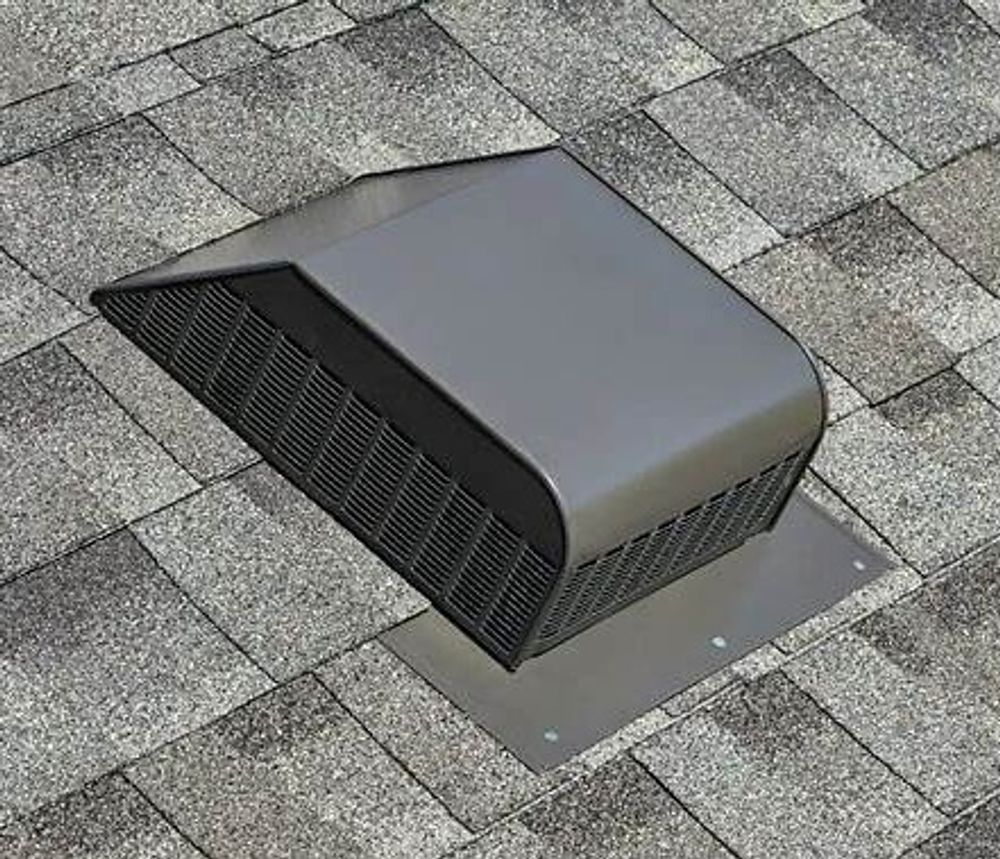
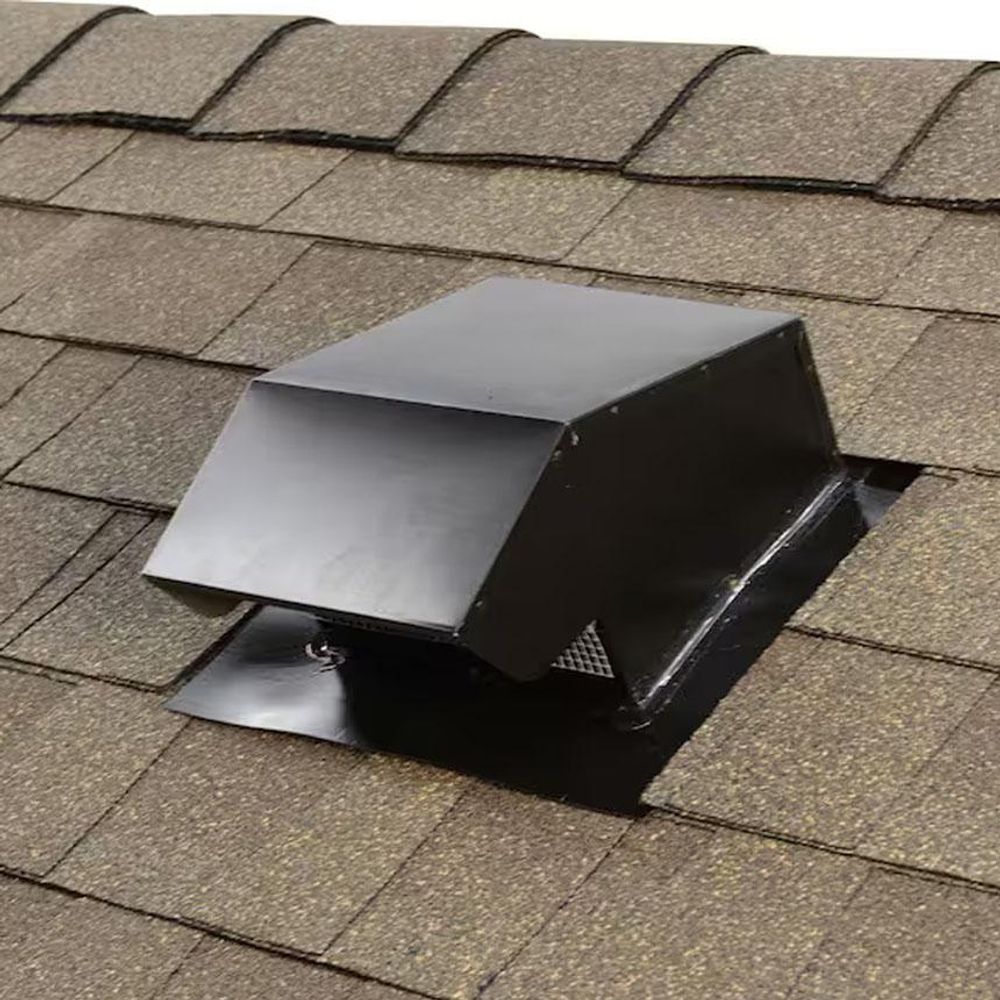
A slant-back vent is a low-profile exhaust vent designed to remove heat and moisture from the attic while maintaining an attractive appearance. These vents provide reliable passive ventilation and help reduce attic temperatures, preventing premature aging of roofing materials.

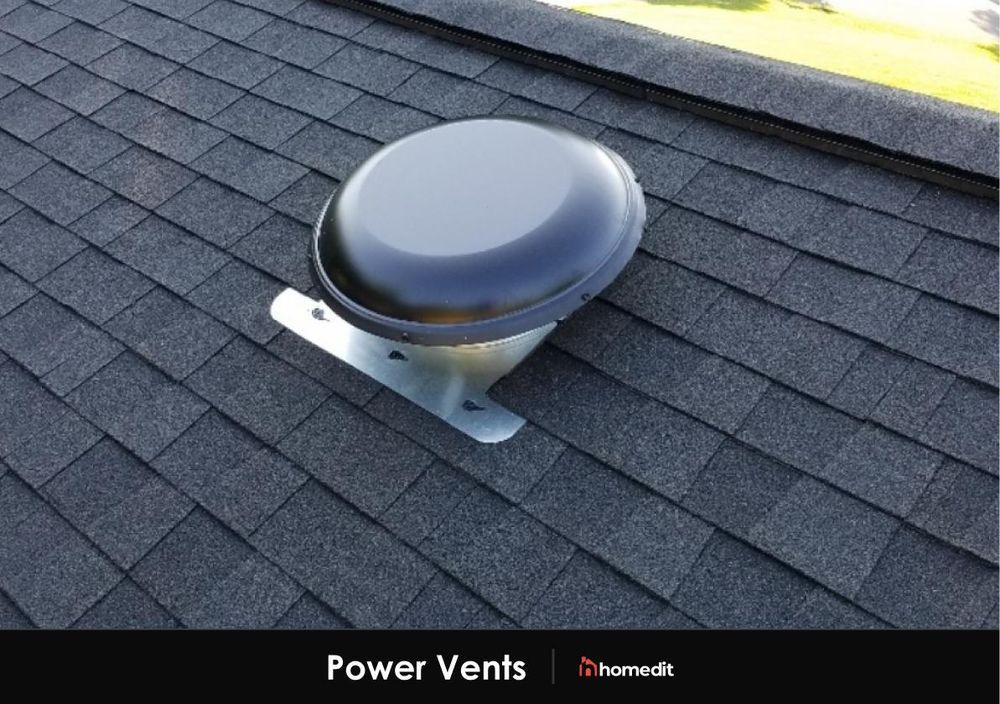
A powered roof vent uses an electric motor to actively remove hot, humid attic air. Unlike passive vents that rely on natural airflow, a powered vent pulls air from the attic and exhausts it through the roof, helping to lower attic temperatures and reduce moisture buildup. When properly balanced with sufficient soffit intake, air sealing, and balanced exhaust, verify these before recommending powered fans.

A properly installed dryer vent safely exhausts warm, moist air from the home's dryer to the exterior. Proper ventilation improves dryer efficiency, reduces drying times, and minimizes the risk of moisture buildup or lint-related fire hazards.

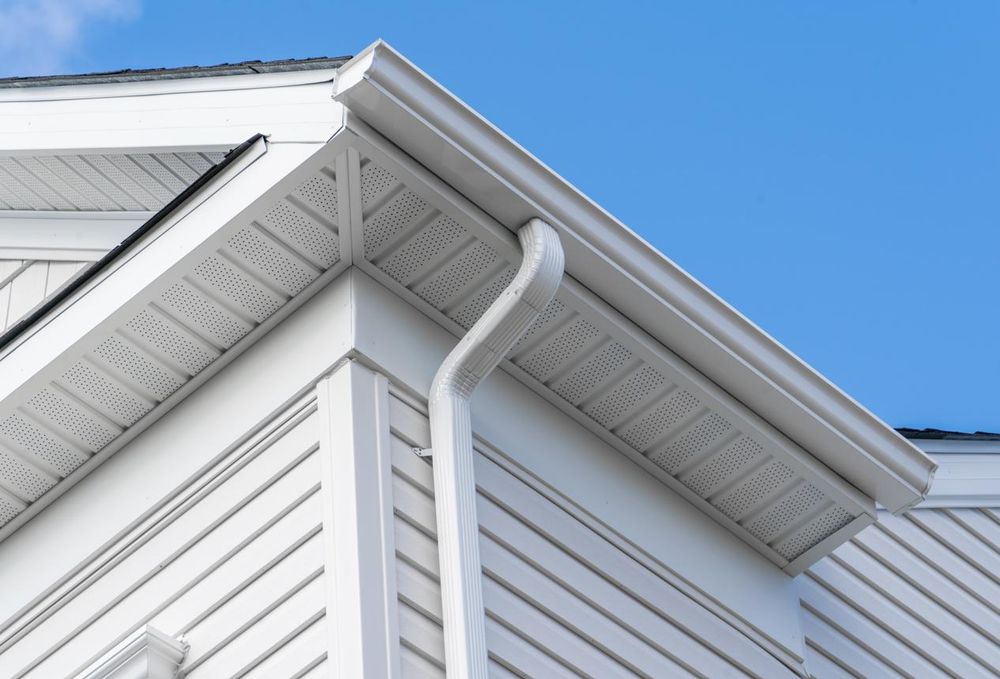
Continuous soffit vents are installed along the roof eaves to provide a consistent source of fresh intake air for the attic. When paired with proper exhaust ventilation, soffit vents create balanced airflow that helps regulate attic temperatures and control moisture levels year-round.

Blocked or clogged soffit vents can restrict fresh airflow into the attic, reducing the effectiveness of the entire ventilation system. Insulation, debris, or other obstructions can trap heat and moisture in the attic, potentially leading to higher energy costs, mold growth, and premature roof deterioration
Gable Attic Ventilation
Gable vents are installed near the peak of a home's exterior gable walls
and are designed to promote natural airflow through the attic space.
Working with intake ventilation, gable vents help reduce heat and
moisture buildup by allowing air to circulate across the attic.

Homes in Richardson and across North Texas deal with intense heat for much of the year. That heat doesn't just stay outside. It builds up in the attic and can create major stress on the materials above and below it. Poor attic ventilation can lead to higher attic temperatures, more wear on your shingles, and more demand on your cooling system. In some homes, it can also trap humidity and cause moisture issues around the roof deck and framing.
That is why attic ventilation is not just an add-on. It is a key part of protecting the investment you made in your home. Whether you are replacing a roof, dealing with comfort issues, or trying to improve energy efficiency, we can help you make smart ventilation choices.

About Pillar Roofing
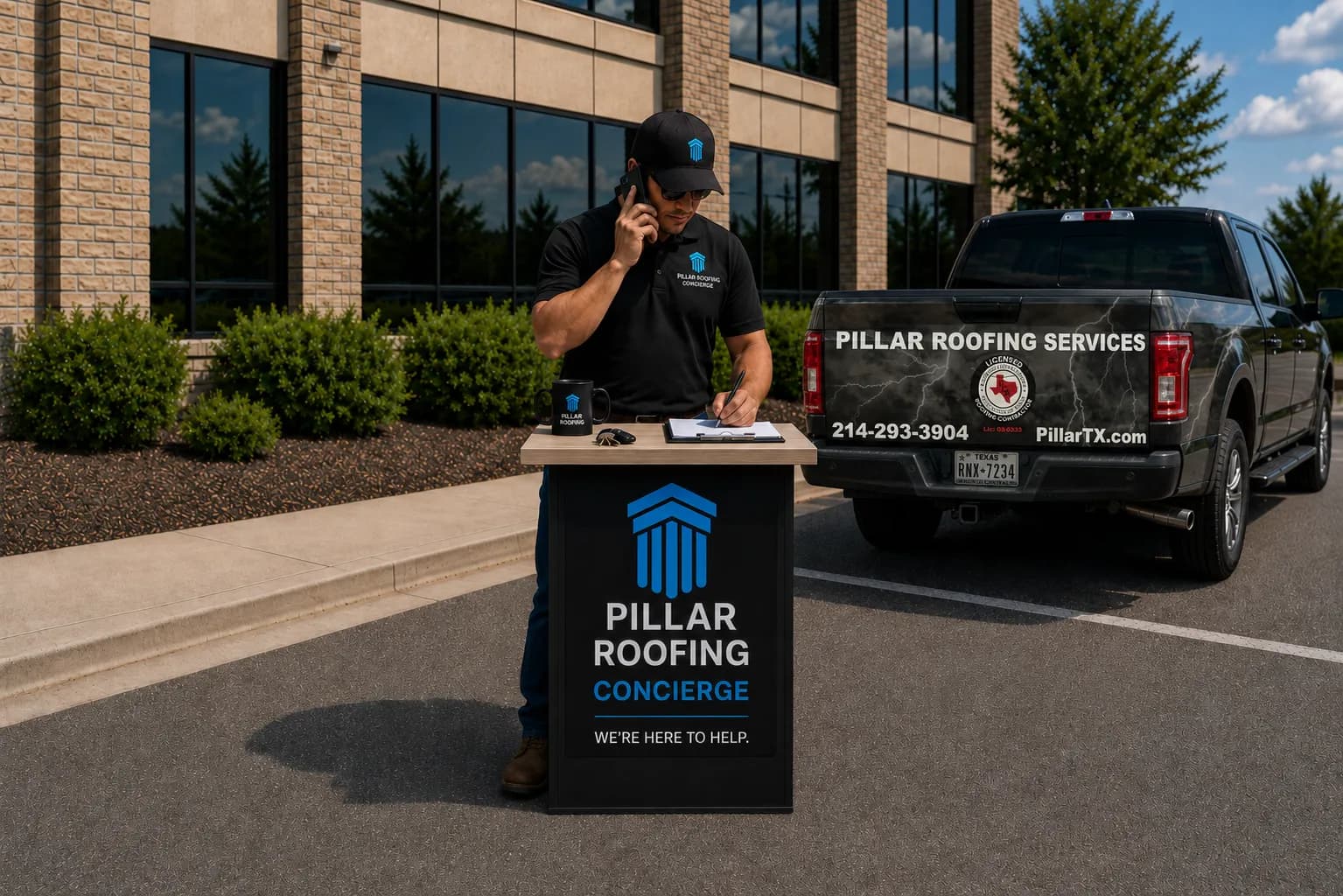
From your first phone call to the final walkthrough, the Pillar Roofing Concierge and Coordinator will guide you and keep you informed every step of the way.
You'll receive clear updates, honest answers, progress reports, scheduling notifications, and photos when needed—so you're never left wondering what's happening.
We believe great service is about building trust through consistent, professional communication.

Reviews
Solid Work Earns Honest Feedback
“Pillar Roofing replaced my roof and gutters last month and they did an excellent job. Steve and George are awesome! They were very quick to respond and answer any questions that we had. I highly recommend Pillar if you need a new roof!!”
“Can’t recommend Pillar Roofing enough! Steve and Wayne came out within a day of my talking to them, took their pictures and came back with several bid offers, everything from a full rebuild to simply minimal patching. We went with the middle road of doing a liquid TPO, which they got done in record time, and hauled off all their materials. No leaks on that project since, and we had them back out for another roof that started leaking after that terrible 2022 north Texas rainstorm. Same story, record time for the bid, and they got it done with no hassle on our end. Highly recommended! John Lee Harrison- The Armstrong Foundation”
“Pillar Roofing roofing has responded quickly to our requests and we have I have to admit that they've done an excellent job given very tight time constraints we recommend pillar roofing for any of your needs commercial or residential.”