Commercial Roof Inspections
Detailed reports, infrared moisture detection and clear recommendations for protecting your building.

About Pillar Roofing
Request a Commercial Roof Assessment
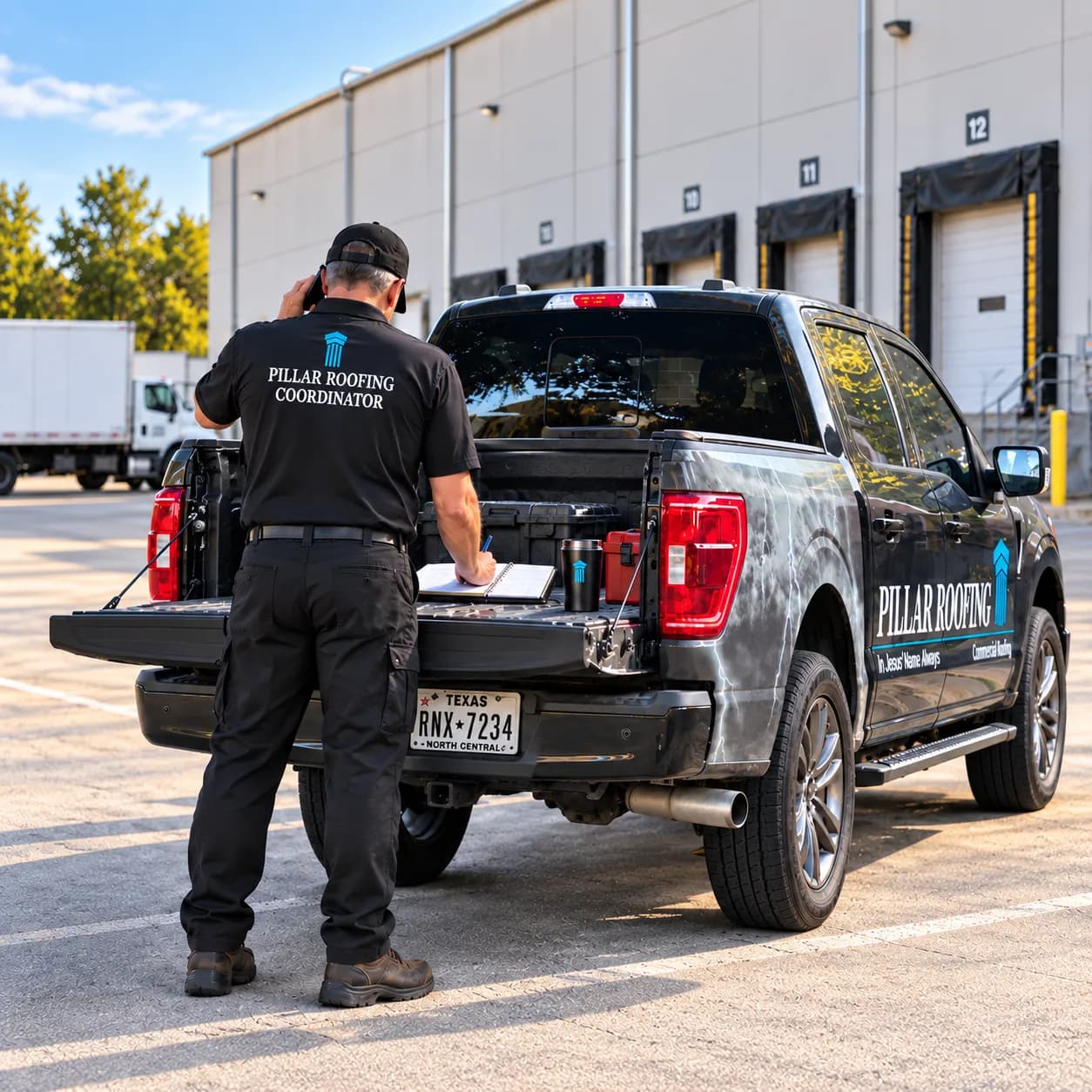
One dedicated Pillar Roofing Coordinator manages inspections, scheduling, building access, safety requirements, crews, progress documentation and closeout records giving property managers one accountable contact from evaluation through completion.
Vendor Readiness
Certificate of insurance
RCAT licensing information
Manufacturer system and warranty information
Safety documentation
W-9 and vendor paperwork
Detailed scope and closeout documentation
This page includes actual project photos and illustrations used to explain our services.
About Pillar Roofing
We Find It Before it leaks
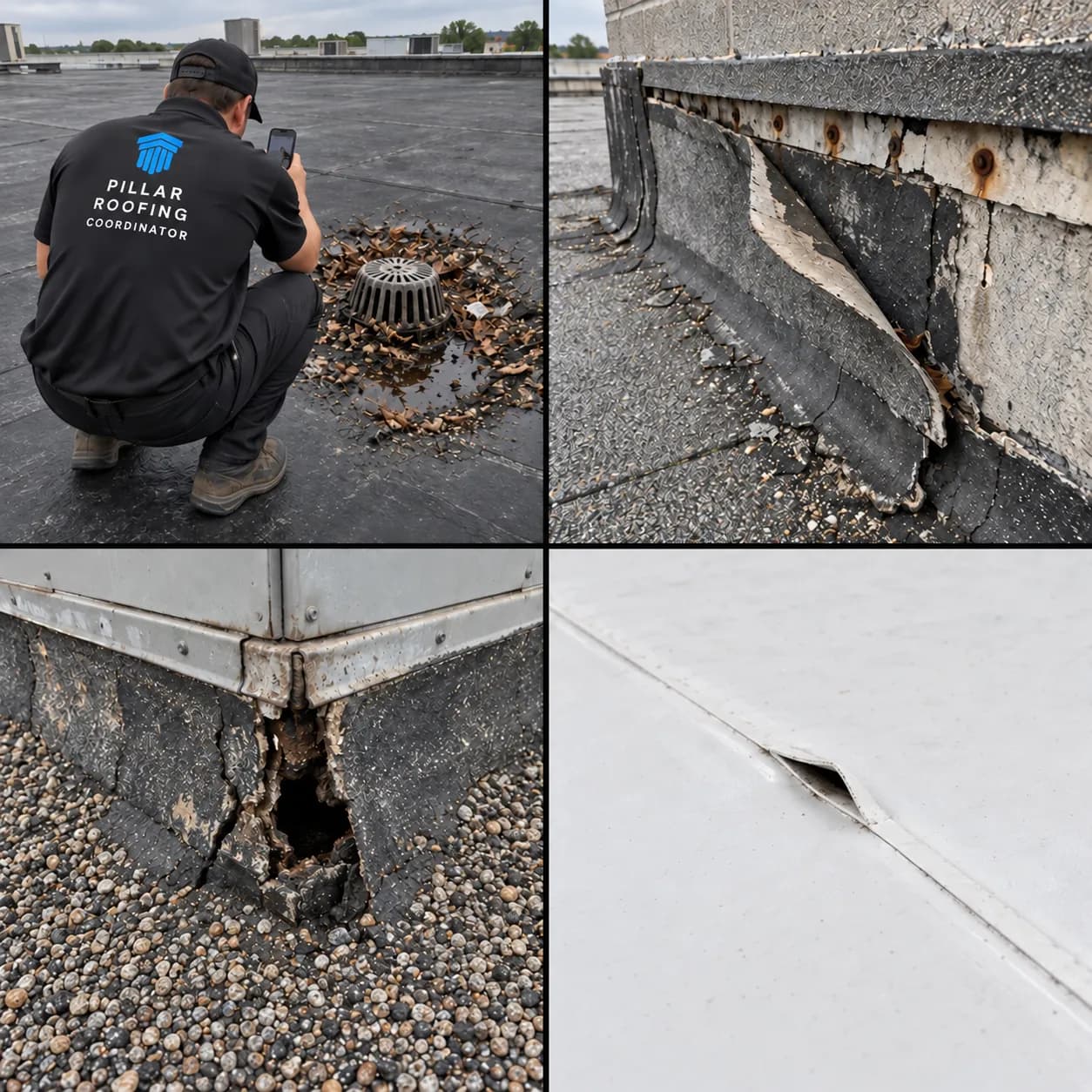
Commercial roofs rarely fail in only one obvious place. A clogged EPDM drain, loose modified-bitumen parapet flashing, deteriorated AC-curb detail on a tar-and-gravel roof, or a small fish-mouth in a TPO seam can each become a serious source of water intrusion. With more than 25 years of experience across virtually every commercial roofing system, Pillar Roofing knows where failures begin, what they look like, and how to repair them correctly.
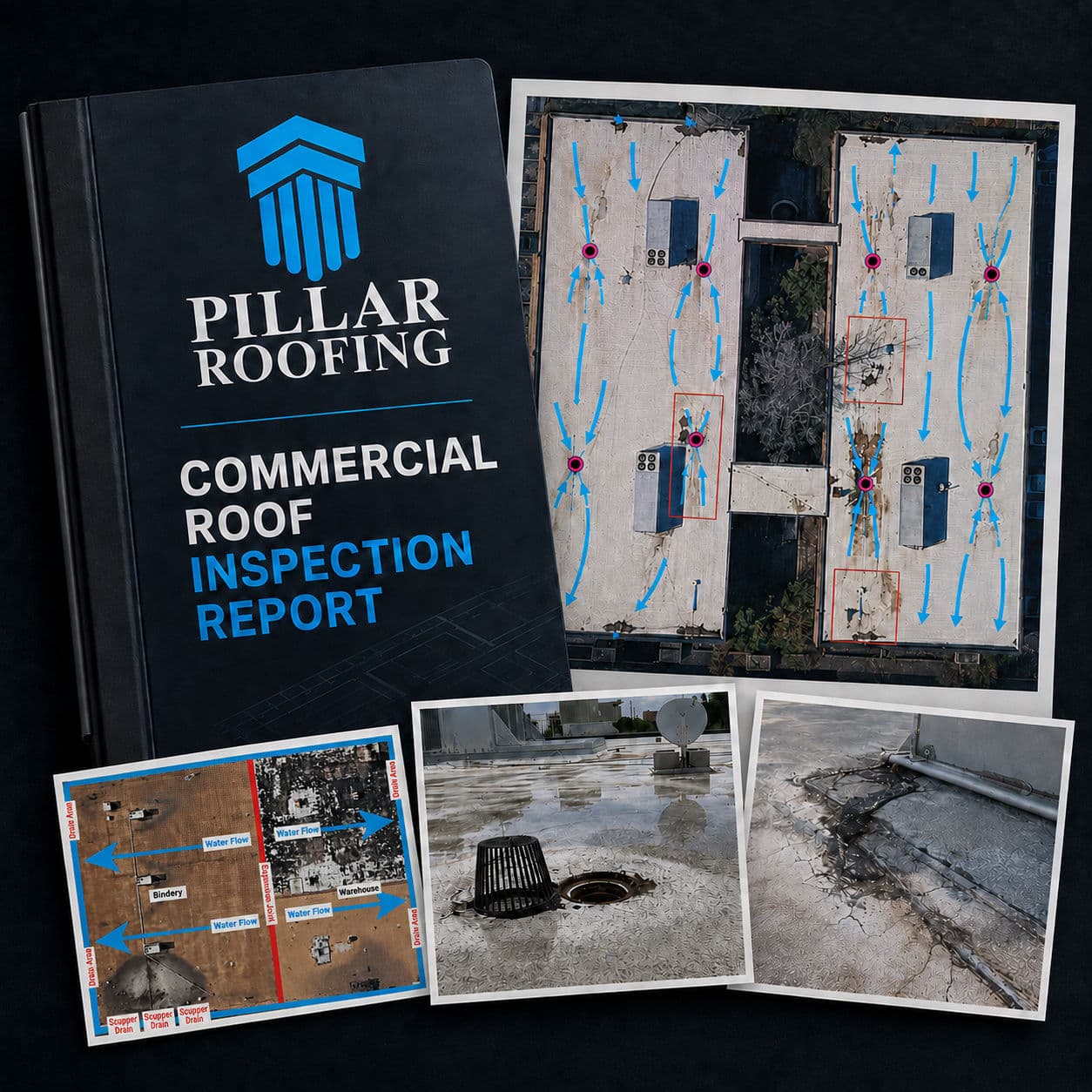
Our inspection work is one of our strongest advantages. We examine the roof with a sharp, methodical eye and document every significant condition we uncover. The inspection is followed by an exceptionally detailed, professionally organized report containing photographs, damage locations, severity assessments, immediate concerns, recommended repairs, and long-term options. You receive more than a collection of pictures—you receive a clear plan for protecting your property.
About Pillar Roofing
Get a detailed inspection report
Every Pillar Roofing Coordinator inspection is supported by a comprehensive report designed to give you a clear understanding of your roofing system.
Our reports combine professional research, detailed digital photographs, material and system information, observed conditions, recommended remedies, a proposed scope of work, and the logistics required to complete it properly. Instead of receiving a simple list of problems, you receive a carefully organized roofing roadmap—one you can review for yourself, share with decision-makers, and use to make informed repair, maintenance, or replacement decisions.
About Pillar Roofing
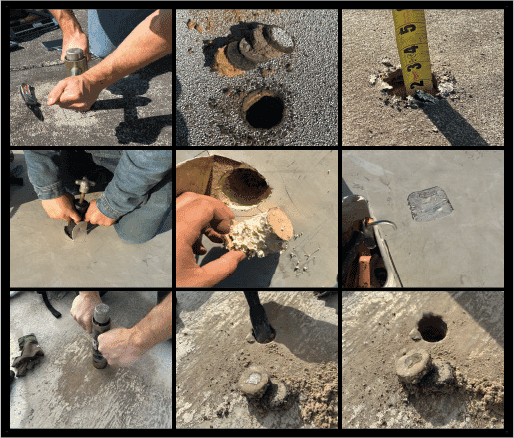
The Core Cut – A Window Into Your Roof's History
A roof core sample is one of the most valuable diagnostic tools available. Think of it as a window into your roof's history. The building's management approval is required before core cuts are taken. The core cut opening will be resealed directly after photos are taken.
We can identify every layer installed over the life of the building, the insulation types and thicknesses, moisture conditions, attachment methods, and the overall condition of the roof assembly.
If two roofs are already in place and the system has reached the end of its service life, a complete tear-off is typically required before a new roof can be installed.
About Pillar Roofing
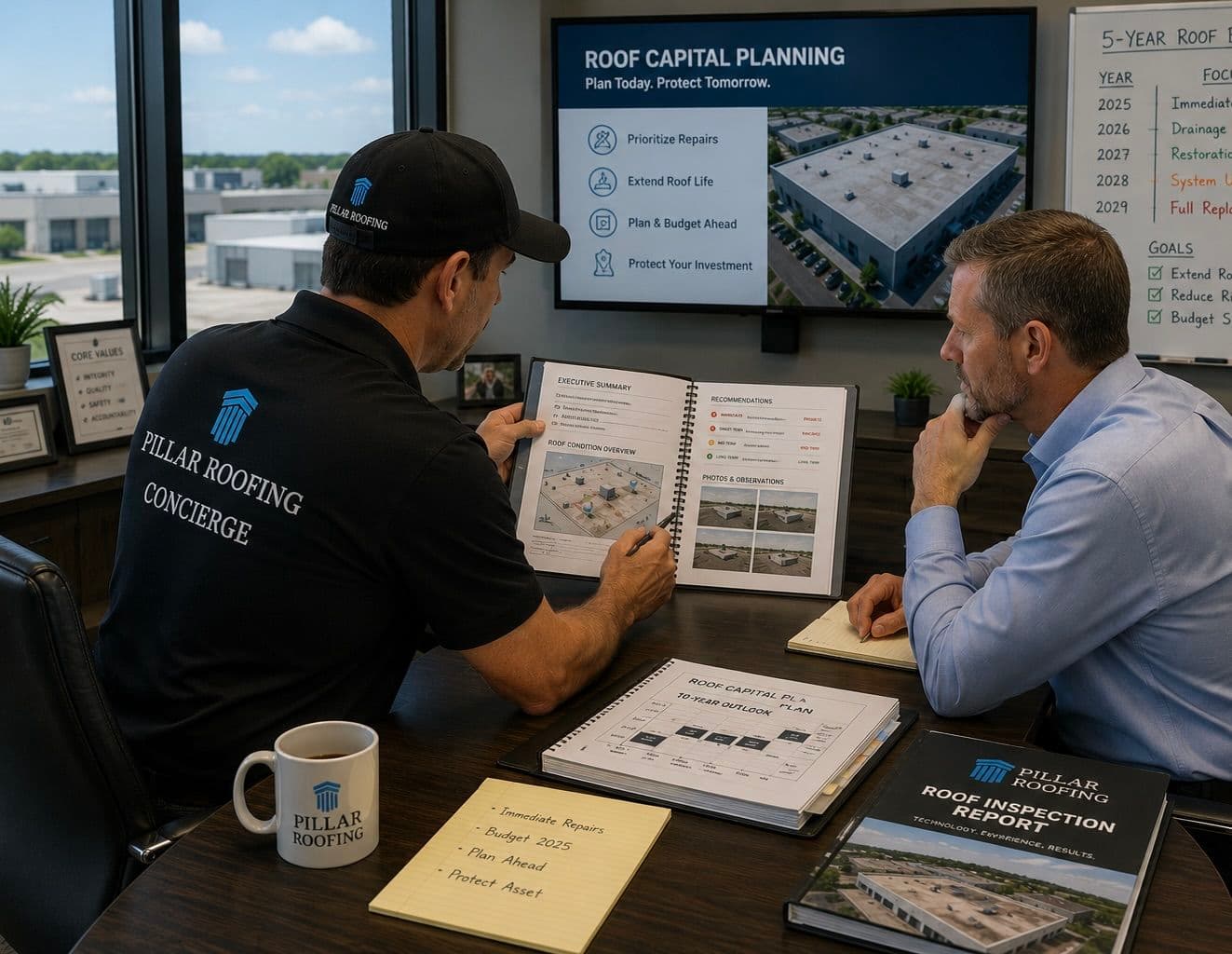
Maintain Your Roof While Planning Replacement.
Every roof has a life cycle, and our job is to help you get the most value from every year of it.
Think of us as your roof's physician—we diagnose the condition, prescribe the right repairs, and develop a practical treatment plan based on your building's needs and your capital budget.
When a full replacement isn't financially feasible today, we'll coordinate strategic repairs and maintenance that safely extend the roof's service life while you prepare for future capital funding.
The goal is simple: keep your building protected, avoid costly emergencies, and make sure you're ready when it's time to invest in a new roofing system.
Service Details
Commercial Roof Inspections and Reports
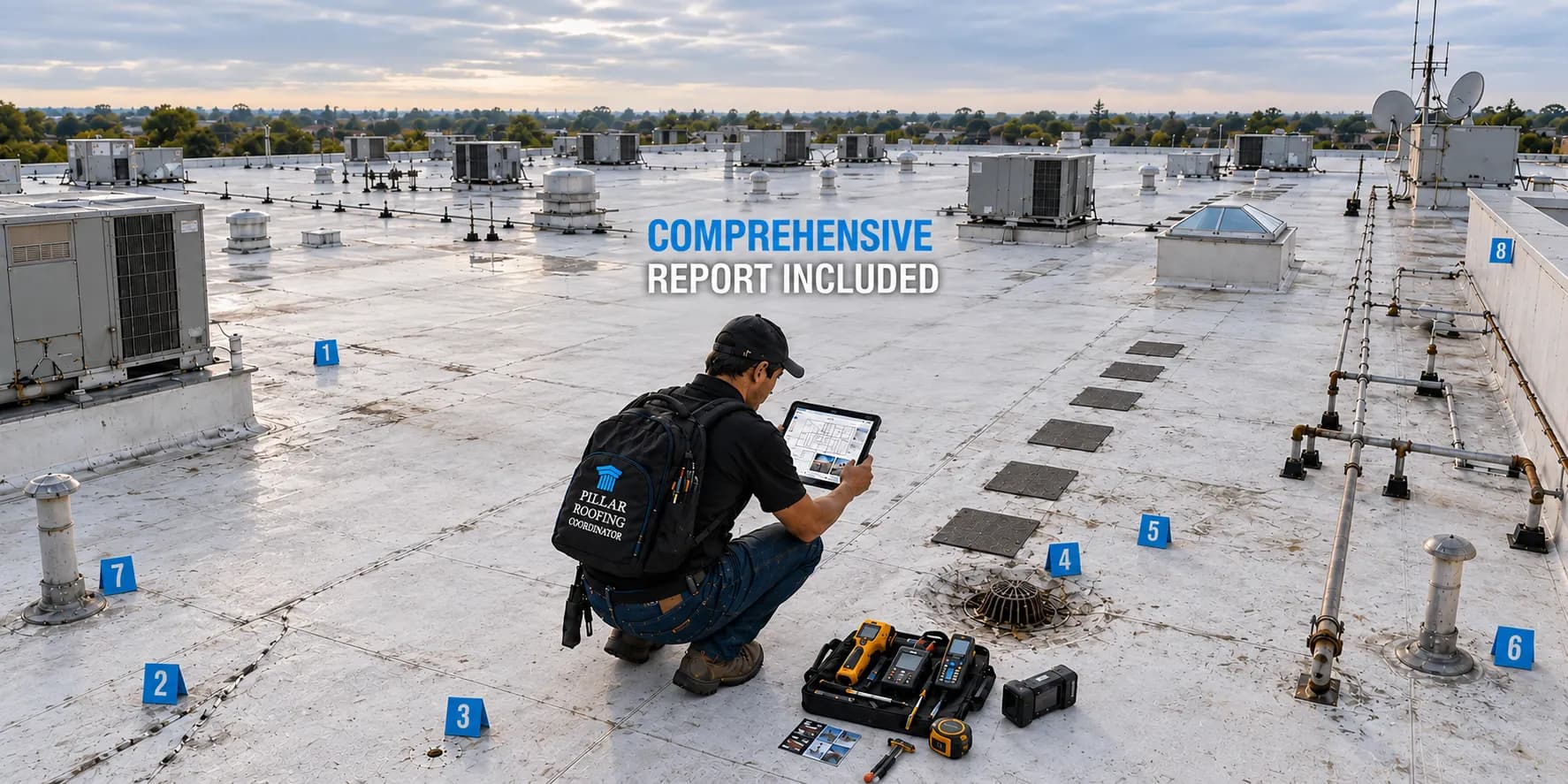
Your Pillar Roofing Coordinator conducts a complete roof-system inspection and prepares a clear report for owners, property managers, and facility teams. Whether you are responding to leaks, storm damage, aging materials, tenant complaints, or planning future work, we inspect the roof, document visible conditions, and explain priorities in practical terms.
The objective is not simply to locate one leak. It is to understand how the membrane, flashings, drainage, penetrations, perimeter, previous repairs, and rooftop traffic are affecting the performance of the complete roofing system.

What our full roof inspection includes
The exact scope depends on the roof type, age, layout, and current condition. Our inspections commonly include:
Roof membrane or covering condition
Seams, laps, fasteners, and attachment points
Flashing around walls, curbs, skylights, HVAC equipment, and penetrations
Drains, scuppers, gutters, downspouts, and visible water-flow concerns
Ponding water, low areas, and slope conditions
Evidence of leaks, moisture entry, and interior water staining
Punctures, blisters, cracks, splits, and surface wear
Hail, wind, and debris-related damage
Parapet walls, coping, perimeter metal, and roof transitions
Previous repairs, workmanship concerns, and aging materials
Rooftop traffic areas and service paths
We inspect single-ply membranes, modified bitumen, built-up roofing, metal roofing, and other low-slope systems. Because each system ages and fails differently, we tailor the inspection to your building's roofing assembly.

Detailed roof reports with clear findings
After the inspection, we prepare a professional report outlining the roof’s current condition, visible damage, areas of concern, and recommended next steps. Reports may include condition summaries, photographs of problem areas, maintenance priorities, and practical repair or replacement recommendations.
When to schedule a full roof inspection
Consider scheduling an inspection when:
Your building has experienced hail, high winds, or severe weather
You notice interior water stains or recurring leaks
The roof is aging and you want to track its condition
You are buying, selling, or assuming management of a property
You need documentation for budgeting or maintenance planning
You want to evaluate previous repairs or workmanship
The facility has not received a recent professional roof assessment

Why commercial property owners choose us
Experience That Helps You Make Decisions
Our Coordinator does more than identify problems. We review the findings with you, answer questions, and organize recommendations according to urgency, roof condition, building operations, and long-term goals. This gives decision-makers a clearer basis for planning repairs, maintenance, or eventual replacement.
If repairs are needed, we can prepare an estimate and explain the proposed work.

Drone Roof Inspections
Advanced Technology
Drone Roof Inspections — Comprehensive Aerial Visibility
When roof access is difficult, steep, unsafe, or disruptive to building operations, aerial inspection technology can provide a broader view of the roofing system. High-resolution imagery can help document membrane conditions, drainage patterns, storm effects, rooftop equipment, perimeter areas, and other concerns that may not be visible from the ground.
Benefits of a Professional Inspection and Report
A documented roof inspection can:
Identify concerns before they become expensive failures
Support maintenance budgets and capital planning
Provide organized records for owners and property managers
Reduce the risk of unexpected leaks and business interruption
Help protect insulation, interiors, inventory, and rooftop equipment
Improve repair-versus-replacement decisions
Establish a condition record for future comparison
Contact Pillar Roofing to schedule a full commercial roof inspection and report. Your Coordinator will inspect the roofing system, document visible conditions, and provide clear recommendations for the next appropriate step.
About Pillar Roofing
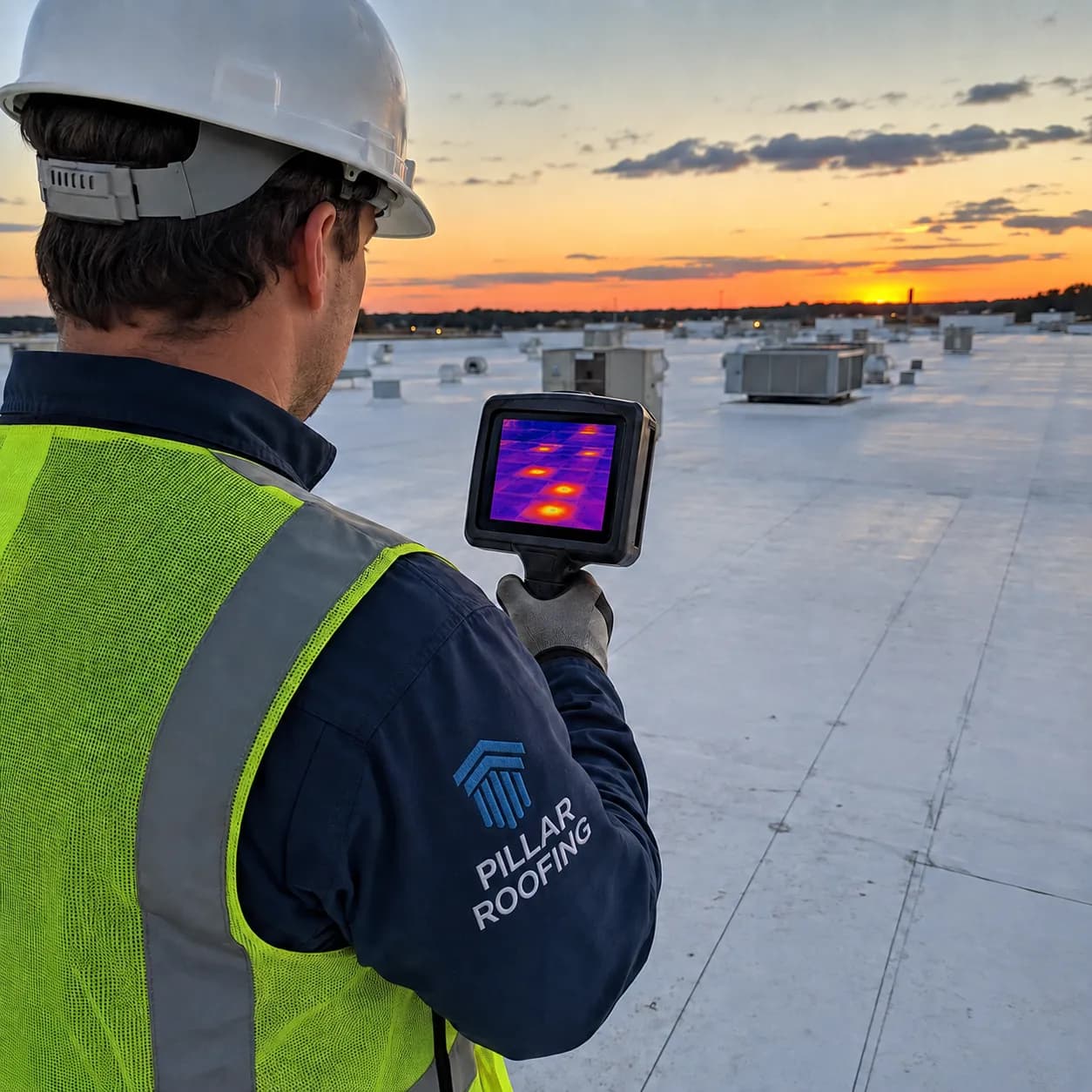
Trapped Moisture Hunt
On older commercial roofs, moisture can become trapped beneath the roof surface without an obvious sign of where it has spread.
We use an infrared camera as the roof cools in the evening to identify temperature patterns that may indicate wet insulation. The images help us map areas that need closer inspection; we then verify suspected moisture before deciding what work is needed.
That information helps us plan targeted repairs or, when a new roof is needed, remove and replace wet sections while preserving sound areas where the roof design allows.
For the building owner, a more precise scope can reduce unnecessary tear-off, lower replacement costs, and keep usable roofing material out of the landfill.